You leak a little when you run. Your hip aches after a long hike. Your body has not felt quite like yours since having a baby. You know something needs attention, but you are not sure who to call first.
That uncertainty is common, and you are not alone in it. Physical therapy, chiropractic care, and massage can all help people feel better, but they serve different purposes. Here is how to tell which one fits what you are dealing with.
How Physical Therapy, Chiropractic Care, and Massage Differ
Each profession approaches your body through a different lens.
Physical therapy evaluates how you move, which muscles are weak or overworked, and why symptoms keep returning. Treatment combines hands-on techniques with targeted exercise and education.
Chiropractic care focuses primarily on the spine and joints, most often using manual adjustments to ease back, neck, or joint pain and stiffness.
Massage therapy works on soft tissue to reduce muscle tension, support relaxation, and provide short-term relief from soreness.
None of these is the wrong choice by default. The best option depends on your symptoms and your goals.
When Is Physical Therapy the Right Choice?
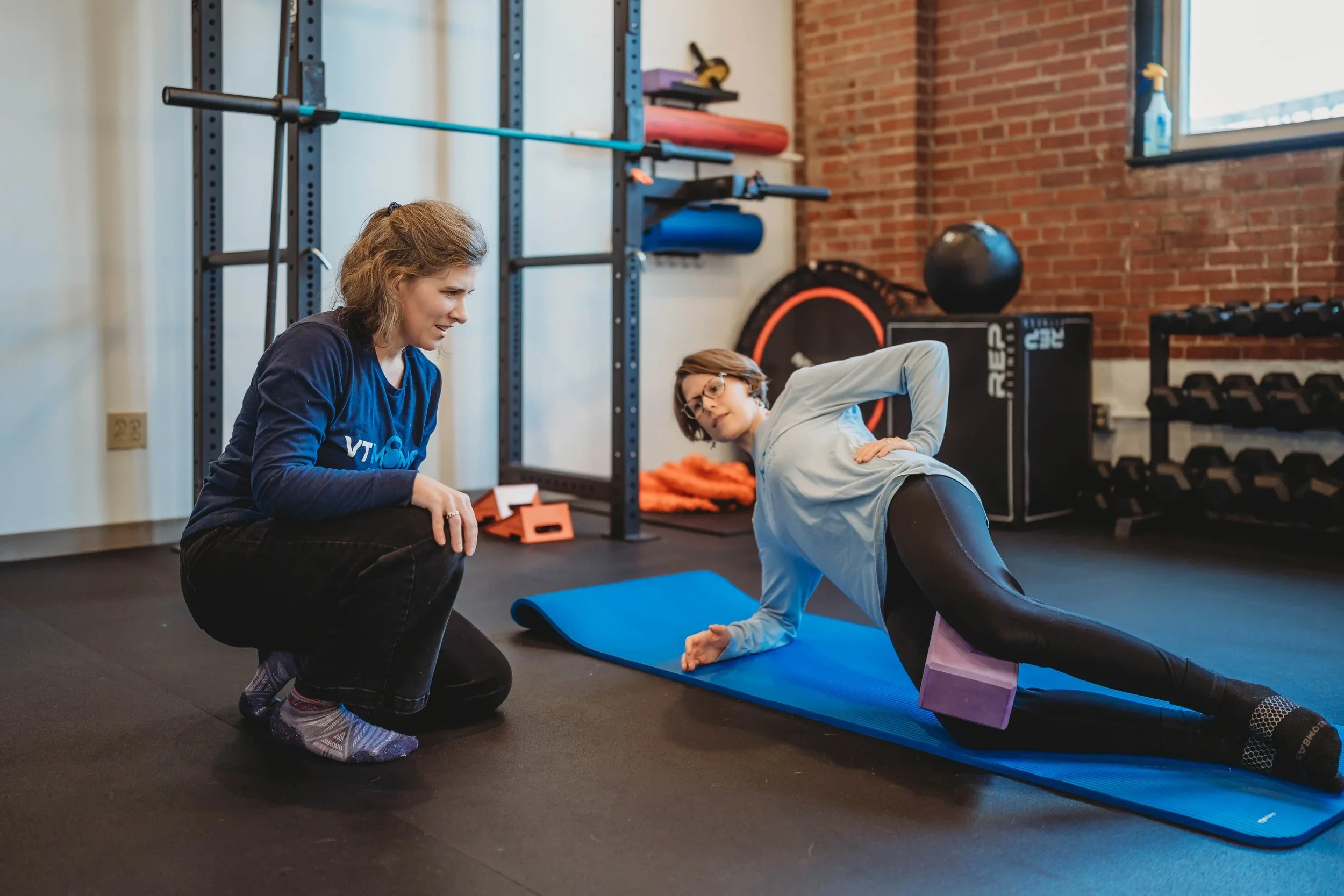
Physical therapy is a strong fit when you want to understand the root cause of a problem and build the strength and movement habits to resolve it. That matters most with pelvic floor concerns and running injuries, where symptoms often stem from how your whole body shares load.
Consider physical therapy if you are dealing with:
Leaking with coughing, jumping, or running
Pelvic pain, painful intercourse, or a feeling of heaviness or prolapse
Diastasis recti or slow postpartum recovery
Runner's knee, hip pain, shin splints, Achilles tendinopathy, or plantar fasciitis
A goal of returning to running or sport after pregnancy or injury
Pelvic floor muscle training is widely recommended as a first-line approach for urinary incontinence, and a physical therapist trained in pelvic health can guide that process with precision. Massage and spinal adjustments are not designed to assess or retrain these muscles.
When Chiropractic Care or Massage Might Help
Chiropractic care may be a reasonable option if your main complaint is spinal stiffness or joint pain that feels mechanical, such as a sore low back after a long stretch of lifting a toddler. Many people find manual adjustments helpful for short-term relief.
Massage can be a valuable choice when your muscles are tight from stress, poor sleep, or hours of carrying and nursing a baby. It can support relaxation and help you feel more comfortable in your body.
The limitation is that neither typically builds the strength, coordination, and movement retraining that help symptoms stay away. Many active moms use massage or chiropractic care alongside physical therapy rather than instead of it.
What Makes Care at VT Moms Physical Therapy and Performance Different
VT Moms Physical Therapy and Performance focuses on pregnant, postpartum, and active moms, so this is not a general clinic trying to fit you into a standard plan. The team carries dual expertise in pelvic health physical therapy and running rehabilitation, which means your pelvic floor and your stride can be addressed in the same visit.
Here is what you can expect:
One-on-one time with your licensed physical therapist, with no aides and no shared appointments
A running form assessment and movement screen to identify patterns that contribute to pain or leaking
Hands-on care including manual therapy, myofascial release, dry needling, cupping, and pelvic floor internal techniques when appropriate
Breathwork and neuromuscular re-education to retrain how your core and pelvic floor work together
Progressive strength building and return-to-running plans built around your life
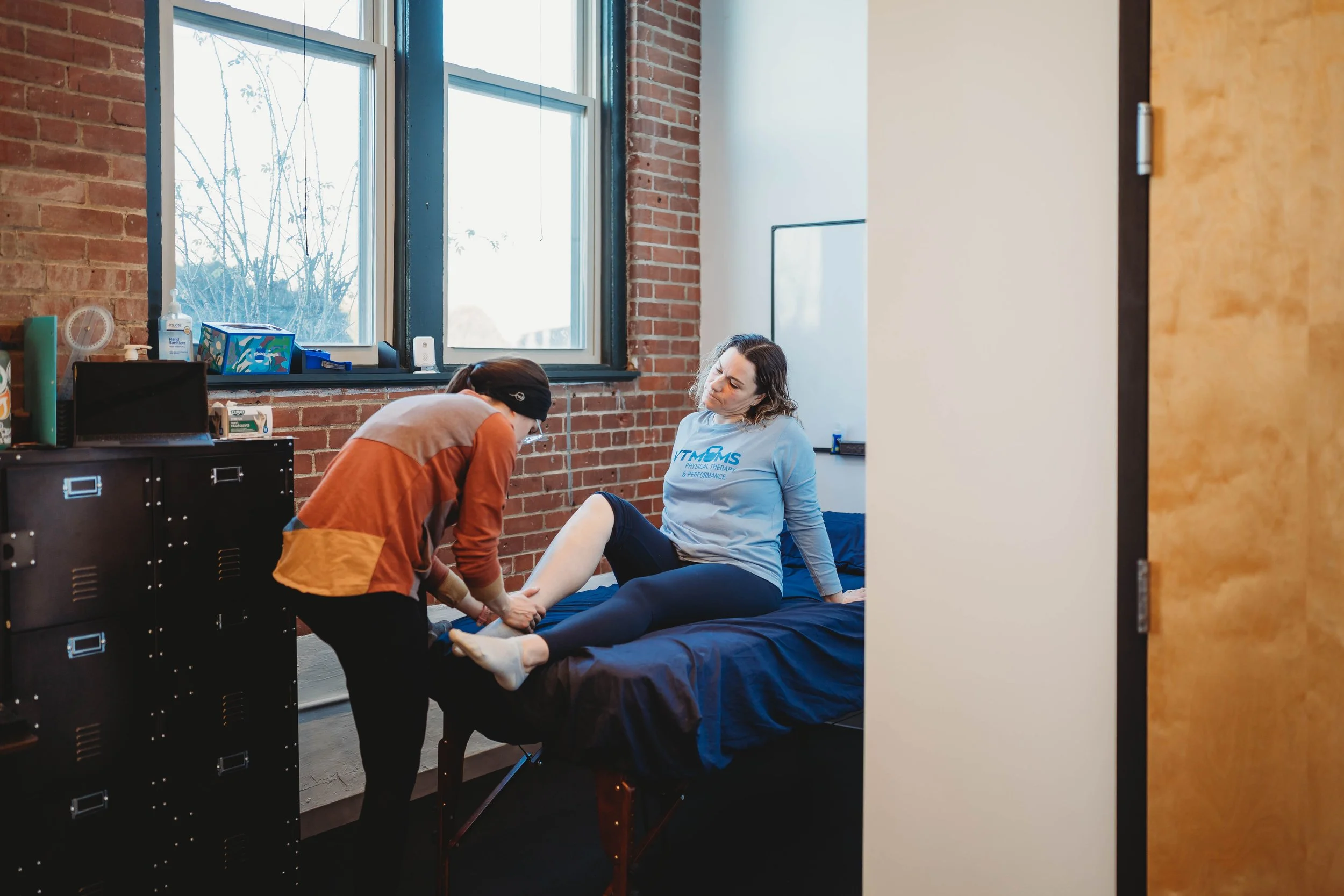
Care at VT Moms Physical Therapy and Performance is trauma-informed, consent-centered, and welcoming to LGBTQ+ and transgender clients. Your baby is welcome at appointments, and an on-site nursing room means childcare is not a barrier to getting the care you need.
Do You Need a Referral or Diagnosis First?
No. Vermont is a direct access state, so you can book physical therapy in Middlebury without a physician referral. If something outside the scope of physical therapy is identified during your evaluation, you will be informed and guided toward the right provider.
Virtual consultations are also available if getting to Middlebury is difficult with your schedule.
Ready to Find Out What Your Body Needs?
You should not have to guess, and you should not have to accept leaking, pain, or fear of movement as the price of motherhood. If you are looking for pelvic floor physical therapy or running physical therapy in Middlebury, VT Moms Physical Therapy and Performance is here to listen, assess, and build a plan with you.
Learn more about our approach, explore our services, or visit our home page to book your initial evaluation. You can also browse more guides on our blog. Your body has carried a lot, and it deserves unhurried, expert care.
